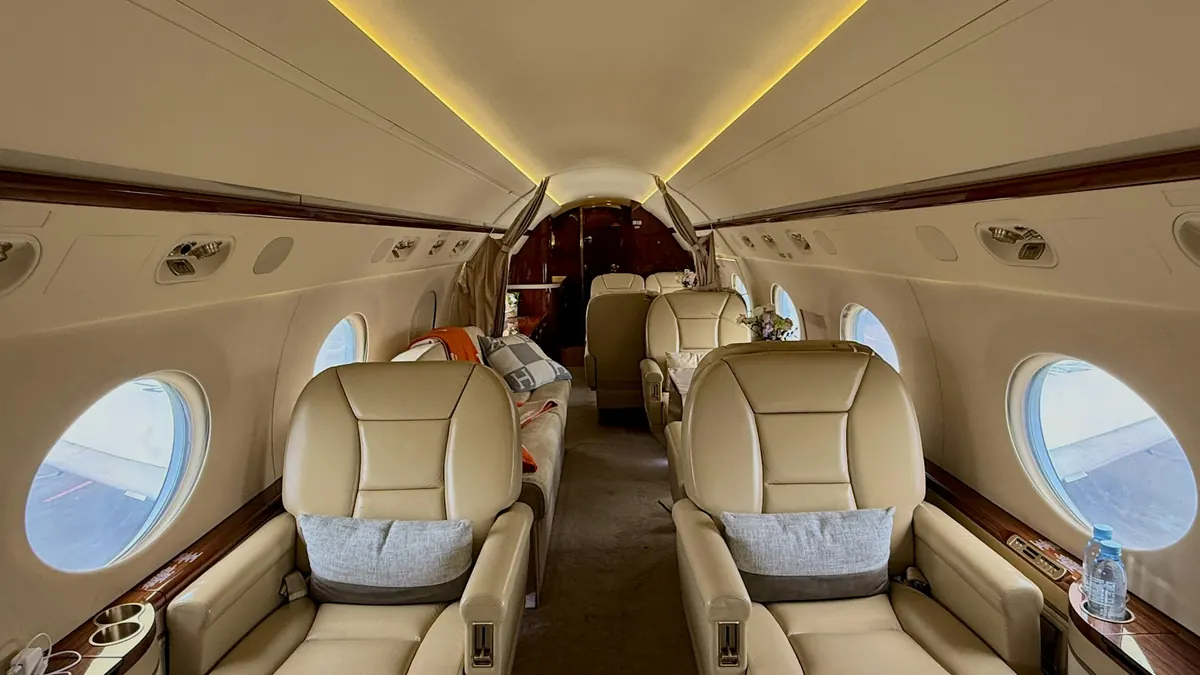
Most people booking a private jet for the first time compare websites. The site with the sharpest photography or the most familiar name feels like the sensible choice. But the company on the website and the company that flies you are often not the same, and the difference between two quotes for the same trip usually has more to do with the aircraft and its operator than with anyone's brand.
This article explains who actually flies a charter, what drives the price gap between quotes, and how to compare two options so you pay for the aircraft rather than the logo.
Who really flies you
In the United States, an on-demand charter flight has to be operated by a carrier certificated under FAA Part 135. That operator holds the certificate, employs or contracts the crew, maintains the aircraft to the required standard and has operational control of the flight: it decides whether, when and how the flight operates. Abroad, the equivalent is the local air operator certificate.
A broker, like us, does not fly anyone. A broker finds suitable aircraft from operators, negotiates the price, handles the paperwork and looks after you. Many well-known charter names work the same way, selling flights on aircraft that belong to other companies. There is nothing wrong with that model as long as it is disclosed. The useful question is not "whose website is this?" but "which operator and which aircraft will I be on?"
Your quote, and later your charter agreement, should name the operating carrier. If it does not, ask. A reputable broker will tell you before you pay.
What actually changes the price
Two quotes for the same route and date can easily differ by thousands of dollars. The reasons are rarely mysterious. Most of the gap comes from a short list of factors:
| What you compare | Why it matters | What to ask for |
|---|---|---|
| Aircraft type | Sets speed, range, cabin size and the hourly rate | The exact model, not just "light jet" |
| Year and refurbishment | Older airframes can cost less to charter and fly just as safely | Year of manufacture and last interior refresh |
| Operator | Holds the certificate and operational control | Operator name and its Part 135 certificate |
| Where the aircraft is based | Repositioning hours are billed to you | Where the aircraft starts and finishes the trip |
| Price format | Hourly quotes often leave out tax and fees | An all-in total with federal excise tax and segment fees |
| Terms | Cancellation and change fees vary widely | The charter agreement before you pay |
Notice what is not on the list: the brand you booked through. A brand can add value through service, but it cannot change how far a Phenom 300E flies or what a Citation XLS+ costs to operate.
The same aircraft, different price tags
Because brokers source from the same pool of operators, the same aircraft can appear in several quotes at different prices. One company may add a larger margin; another may have negotiated a better rate; a third may be quoting hourly and leaving tax and fees for later. When the aircraft, operator and terms match, the comparison becomes simple: the lower all-in total is the better deal.
That is why we put the aircraft model, the operator and one all-in figure on every option. If you receive a competing quote, ask for the same three things and compare line by line.
When paying more makes sense
Booking the aircraft rather than the brand does not mean always taking the cheapest option. Sometimes the extra money buys something real:
- A newer or refurbished cabin on a long flight, where seats, noise and lighting matter more.
- Reliable connectivity if you need to work in the air. Ask what system is fitted and whether it works on your route.
- A cabin attendant on larger aircraft for long trips with a group.
- Operator depth: an operator with several similar aircraft can often substitute one if the original has a technical problem.
- A specific safety audit, if that matters to you or your company's travel policy. ARGUS, Wyvern and IS-BAO are the names you will see most often.
What should not cost extra is the label. If two options use the same model of aircraft from operators with similar standards, the difference in price is mostly margin.
Questions that reveal the real offer
A few direct questions get to the substance of any quote quickly. Ask who the operating carrier is and whether the aircraft on the quote is the one that will fly, or "similar". Ask whether the price is a firm all-in figure or an hourly rate with tax and fees to follow. Ask what happens if the aircraft has a technical problem the day before: does the operator have another, and who pays the difference? And ask for the cancellation terms in writing before you commit. Good answers are short and specific. Vague answers usually mean the details have not been settled yet, which is worth knowing before you compare prices.
Compare like with like
A useful habit is to turn every quote into the same short summary before deciding. For each option, write down:
- Aircraft model and year (and refurbishment year, if offered).
- Operating carrier and its certificate.
- Any third-party audit ratings the operator holds.
- The all-in total, including federal excise tax, segment fees and repositioning.
- What is not included, such as de-icing, catering or Wi-Fi charges.
- Cancellation terms and deadlines.
- Luggage capacity and whether pets are accepted.
Once the options are written this way, the choice is usually obvious. The decision becomes "this aircraft for this price", not "this website or that one".
A quick test: if a quote cannot tell you the aircraft model and the operator, it is not yet a quote you can compare. Ask for both before you go further.
How we work
Fly Private Cheap is a broker, and we say so on every page. We ask several operators about your trip, choose aircraft that fit your group and distance rather than the largest available, and present each option with the aircraft, the operator and an all-in price. You see what you are buying before anything is booked, and nothing is binding until you sign a charter agreement that names the operating carrier.
That is what booking the aircraft, not the brand, looks like in practice: clear options, honest comparisons and a price for the flight itself.
Price your trip all-in
Tell us the route and dates. A charter advisor will send aircraft options with one all-in price each. No membership, deposit or sign-up.
Request a quote